Cloud-Native Architecture: Building Software That Scales Without Limits
The way modern software is architected has undergone a fundamental shift. Monolithic applications — single, tightly coupled codebases deployed as one unit — are giving way to cloud-native architectures designed from the ground up for flexibility, resilience, and scale. For businesses building products that need to grow, cloud-native isn’t just a technical preference. It’s a strategic necessity.
What Cloud-Native Actually Means
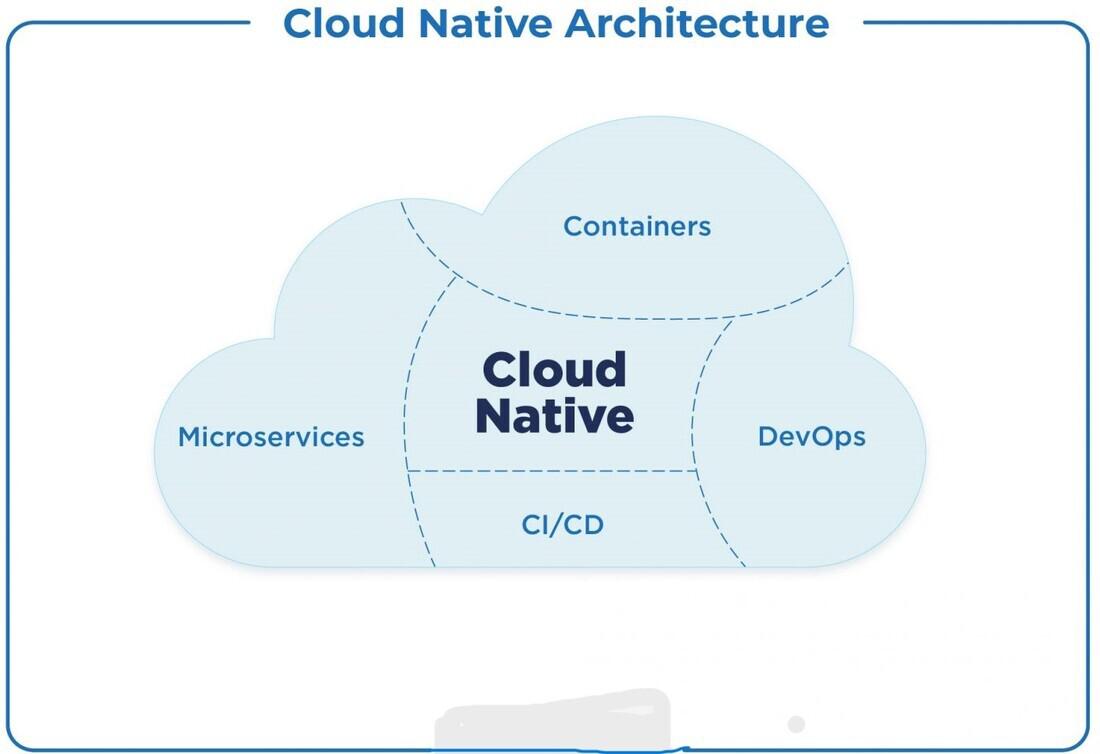
Cloud-native is more than hosting your application on AWS or Azure. It’s an architectural philosophy that embraces microservices, containerization, dynamic orchestration, and continuous delivery as foundational principles. Applications built cloud-native are decomposed into small, independently deployable services — each responsible for a specific business function, each scalable on its own terms.
This decomposition unlocks enormous operational advantages. When traffic spikes on a specific feature, only that service needs to scale — not the entire application. When a bug surfaces in one component, it can be fixed and redeployed without touching anything else. And when a service fails, it fails in isolation rather than taking down the whole system.
Microservices: Power and Complexity in Equal Measure
Microservices architecture is the engine behind most cloud-native systems. By breaking applications into discrete, loosely coupled services that communicate via APIs, teams gain the ability to develop, deploy, and scale each component independently. Different services can even be written in different languages or frameworks — chosen for fitness to purpose rather than organizational convention.
But microservices introduce complexity that monolithic systems don’t have: service discovery, distributed tracing, inter-service authentication, and network latency management all require deliberate design. Teams building on this architecture need deep expertise across the full technology stack — exactly the kind of capability that specialized full stack development teams bring to complex engagements.
The Role of Containers and Orchestration
Docker and Kubernetes have become the de facto standard for packaging and running cloud-native workloads. Containers bundle application code with its dependencies into a portable, consistent unit that runs identically across development, staging, and production environments — eliminating the infamous “works on my machine” problem.
Kubernetes orchestrates these containers at scale: scheduling workloads across clusters, managing rolling deployments, handling service discovery, and automatically restarting failed containers. Mastering this ecosystem requires both infrastructure knowledge and software engineering depth — a combination that not every team possesses in-house.
Strategic Guidance Makes the Difference
Migrating from a legacy monolith to a cloud-native architecture is one of the most complex technical initiatives a business can undertake. The sequencing of service extraction, the design of API boundaries, the selection of managed cloud services versus self-hosted components — each decision has long-term architectural implications that are difficult to reverse.
Organizations benefit significantly from engaging experienced IT consulting partners during the architecture design phase. Expert guidance at this stage prevents the most costly mistakes — poorly defined service boundaries, over-engineered infrastructure, or cloud lock-in that limits future flexibility.
Staffing Cloud-Native Projects With the Right Expertise
Cloud-native projects demand a rare combination of skills: container orchestration, API design, observability tooling, CI/CD pipeline configuration, and security hardening across distributed systems. Finding engineers with this full profile through traditional hiring is slow and competitive.
Many businesses choose to hire dedicated developers with specific cloud-native expertise — embedding them in existing teams to accelerate delivery and transfer knowledge to internal engineers along the way. This model compresses timelines while building lasting internal capability.
The Long-Term Payoff
Cloud-native architecture requires meaningful upfront investment — in design, tooling, and talent. But the long-term returns are substantial: lower operational costs through efficient resource utilization, faster feature delivery through independent deployability, higher reliability through fault isolation, and the ability to scale individual components to meet demand without over-provisioning the entire system.
For businesses building software that needs to grow, cloud-native architecture isn’t a future consideration. It’s the foundation worth getting right today.