
API Design and Strategy: The Invisible Infrastructure Powering Modern Software
Most users never think about APIs. They tap a button, data appears, and the experience feels seamless. But behind every modern digital product — every app, dashboard, integration, and automated workflow — is a layer of APIs making it all possible. For businesses building software in 2025, API strategy is no longer a backend concern. It’s a core business capability.
What APIs Are and Why They Matter
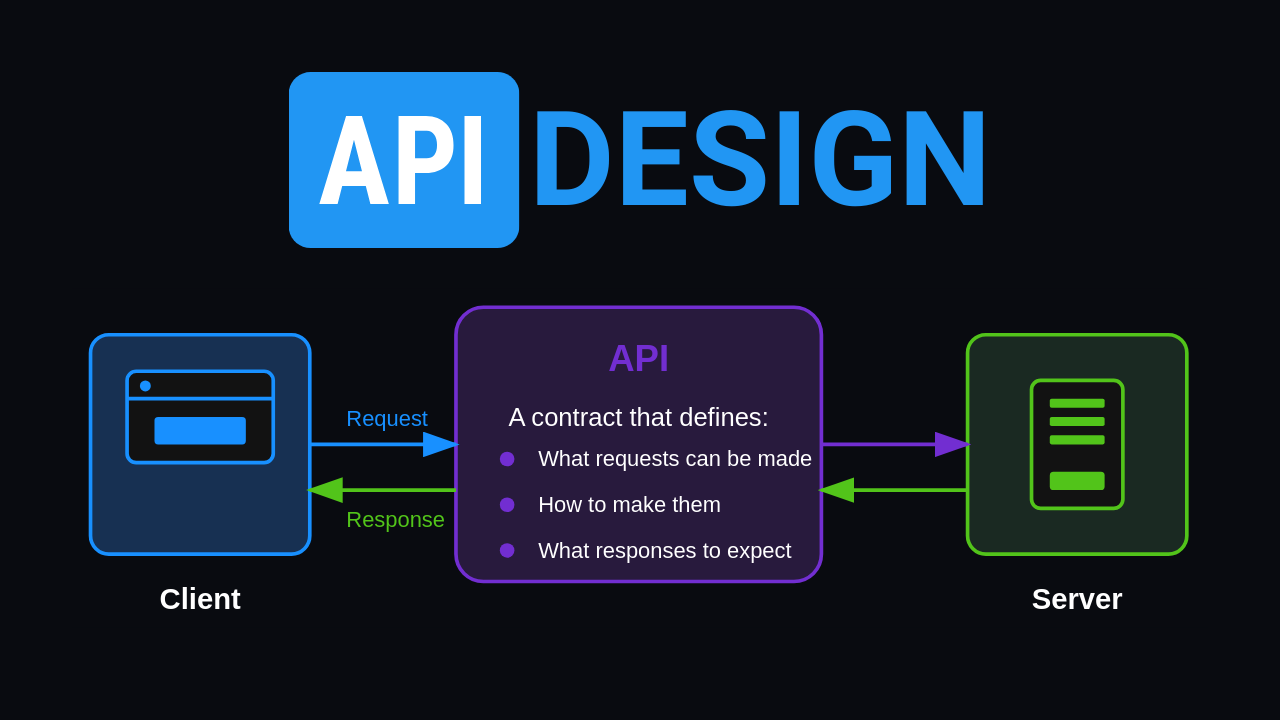
An Application Programming Interface (API) is a defined contract that allows different software systems to communicate with each other. When a travel app shows real-time flight prices, it’s calling an airline’s API. When an e-commerce platform processes a payment, it’s talking to a payment gateway API. When a sales team’s CRM automatically logs emails, it’s syncing via API with their email platform.
APIs are the connective tissue of the modern software ecosystem. They enable systems to share data, trigger actions, and compose capabilities in ways that would be impossibly expensive to build from scratch. And as businesses increasingly rely on third-party services, cloud platforms, and partner integrations, the quality of an organization’s APIs directly affects its ability to move fast and build effectively.
The Principles of Good API Design
Poorly designed APIs create lasting problems. Inconsistent naming conventions, unclear error messages, unpredictable behavior, and breaking changes that disrupt downstream consumers all impose real costs — on developers integrating with the API, on customers whose experiences degrade, and on the engineering teams maintaining the mess.
Good API design starts with clarity: endpoints should do what their names suggest, responses should be predictable, and errors should be informative. RESTful conventions, versioning strategies, and thorough documentation aren’t bureaucratic overhead — they’re what makes an API a reliable foundation rather than a liability. Teams with deep full stack development experience understand how API design choices at the backend layer cascade into frontend complexity and third-party integration difficulty.
APIs as a Product — Not Just Plumbing
The most forward-thinking businesses treat their APIs as products in their own right. Platforms like Stripe, Twilio, and Plaid built their entire businesses on developer-friendly APIs — products so well-designed that other businesses chose to build on top of them rather than building the underlying capability themselves.
Even businesses that aren’t API-first can benefit from this mindset. Well-designed internal APIs accelerate feature development, reduce cross-team dependencies, and make it far easier to adopt new frontend frameworks, mobile platforms, or third-party tools without rebuilding backend logic from scratch.
Security and Governance at the API Layer
APIs are a major attack surface. Exposed endpoints, misconfigured authentication, excessive data exposure, and rate limiting failures are among the most common vulnerabilities in modern applications. The OWASP API Security Top 10 reflects just how frequently these issues appear in production systems — and how costly they can be when exploited.
Organizations that invest in IT consulting services for API security reviews gain systematic assessment of authentication mechanisms, authorization logic, input validation, and data exposure — catching vulnerabilities before they become incidents. API gateways, OAuth 2.0 implementation, and monitoring for anomalous usage patterns should all be standard components of any API security strategy.
Scaling API Teams Efficiently
As API surface area grows, so does the complexity of managing it. Versioning policies, deprecation timelines, documentation maintenance, and consumer communication all require dedicated attention. Many organizations find that their core engineering teams can’t absorb this overhead without sacrificing delivery velocity.
Working with partners who offer access to experienced developers on demand — through models like hire dedicated developers — allows businesses to scale API development and maintenance capacity precisely when needed, without the long lead times of traditional hiring.
The Strategic Payoff
A well-designed API layer pays compounding dividends. It accelerates feature development by enabling parallel work across frontend and backend teams. It simplifies third-party integrations. It creates optionality — making it easier to swap underlying services, adopt new platforms, or expose capabilities to partners without rewriting the entire system.
In a software landscape where speed, flexibility, and integration capability define competitive outcomes, API strategy deserves a seat at the table alongside product and architecture decisions.