
Choosing the Right Tech Stack for Your Startup: A Practical Guide
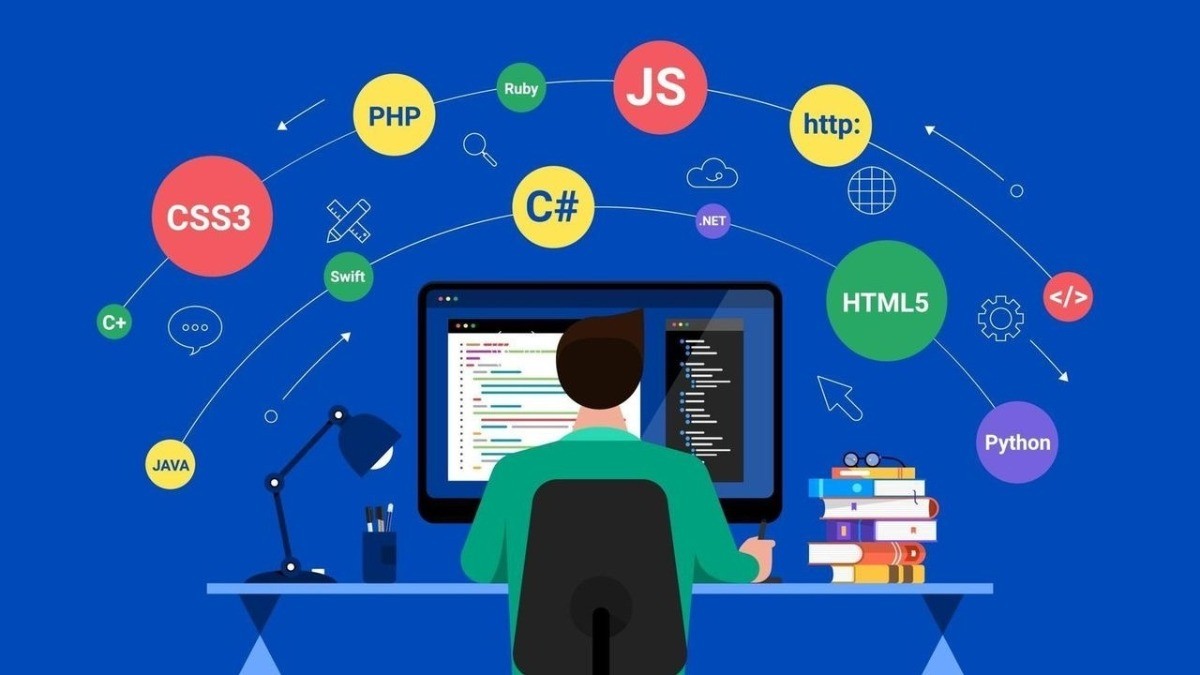
One of the most consequential decisions an early-stage startup makes has nothing to do with marketing, fundraising, or hiring. It’s the technology stack — the programming languages, frameworks, databases, and infrastructure tools that will form the foundation of everything built afterward. Get it right and the stack accelerates your growth. Get it wrong and it becomes a ceiling that limits how fast and how far you can go.
Why Stack Decisions Matter More Early On
In a large enterprise, switching technologies is expensive but survivable — there are teams, budgets, and time to manage the transition. In a startup, a poor technology choice can be existential. Rebuilding a core system when you have six months of runway and a product roadmap to deliver is a crisis, not a project.
Early architectural decisions also compound. The database schema designed in week two influences every feature built in year two. The framework chosen for the MVP determines which engineers you can hire and how quickly they ramp up. The cloud provider selected at launch shapes your infrastructure costs and capabilities for years. These choices deserve serious deliberate thought — not just defaulting to whatever the founding engineer happens to know.
Principles for Choosing a Startup Stack
The best startup stacks balance three competing priorities: developer productivity, scalability headroom, and hiring accessibility. A highly exotic technology might offer technical advantages but severely limit the talent pool available. A framework that moves fast in the early days might create scaling challenges at ten times the user load.
Proven, widely adopted technologies — React or Next.js on the frontend, Node.js, Python, or Go on the backend, PostgreSQL or a managed cloud database for storage, and AWS, GCP, or Azure for infrastructure — remain strong defaults for most startups. They offer extensive documentation, large communities, abundant tooling, and deep talent pools. Deviation from these defaults should be justified by a specific technical requirement, not novelty.
Teams with strong full stack development expertise can assess these trade-offs objectively — recommending stacks that match the startup’s specific domain, team composition, and growth trajectory rather than applying one-size-fits-all solutions.
Build vs. Buy: Where to Spend Your Engineering Bandwidth
Every hour a startup’s engineers spend building infrastructure that already exists as a managed service is an hour not spent on the product differentiation that actually wins customers. Authentication, payment processing, email delivery, search, and analytics all have mature third-party solutions that outperform anything a small team could build in the same timeframe.
The build-vs-buy calculus should always start with a strong bias toward buying — and redirect precious engineering capacity toward the features only your team can build. Startups that try to build everything themselves rarely ship fast enough to find product-market fit before the runway runs out.
Engaging IT consulting advisors early in the stack selection process helps founders avoid the most common and costly mistakes — over-engineering for scale that doesn’t yet exist, under-investing in security basics, or locking into vendor relationships that become difficult to exit.
Scaling the Team as the Product Grows
The engineers who build a zero-to-one MVP are rarely the same profile as those needed to scale a product from one thousand to one million users. Early-stage startups need generalists who can move fast across the full stack. Growth-stage companies need specialists — performance engineers, security architects, infrastructure experts, and mobile developers.
Rather than trying to anticipate every future hire through full-time headcount, smart startups stay lean and choose to hire dedicated developers with the exact skills needed at each stage. This keeps burn rates manageable while ensuring the team always has the right expertise for the current challenge.
The Stack Is a Means, Not an End
The best technology stack is the one that lets your team build the right product for your customers as fast as possible. It’s not the most elegant, the most cutting-edge, or the one that looks most impressive in a pitch deck.
Startups that stay focused on customer problems — and choose technologies that serve those problems rather than the other way around — are the ones that build something worth scaling.