
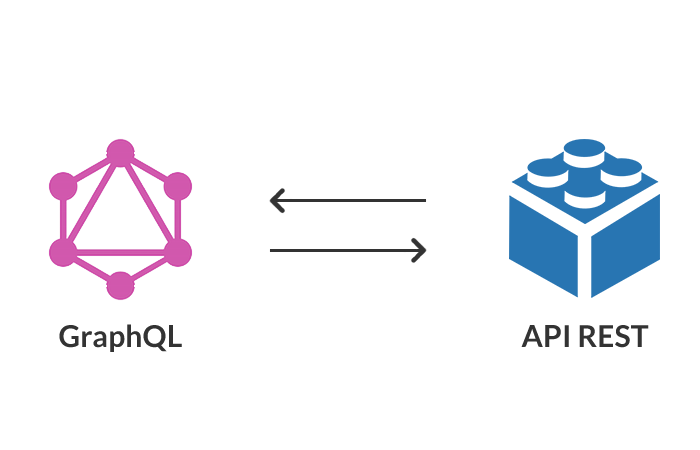
GraphQL has emerged as a powerful alternative to traditional REST APIs, offering developers unprecedented flexibility in how they query and manipulate data. This query language for APIs addresses many limitations of REST by allowing clients to request exactly the data they need, nothing more and nothing less, fundamentally changing how frontend and backend systems communicate.
Understanding GraphQL Fundamentals
GraphQL introduces a type-safe query language that sits between clients and data sources. Unlike REST endpoints that return fixed data structures, GraphQL allows clients to specify their exact data requirements through queries. The server responds with precisely what was requested, eliminating over-fetching and under-fetching problems that plague traditional REST implementations.
The GraphQL schema defines available data types, fields, and relationships. This schema serves as a contract between frontend and backend teams, documenting what data exists and how it can be accessed. Strong typing catches errors during development rather than production, significantly improving developer experience and application reliability.
Three core operations power GraphQL: queries for reading data, mutations for modifying data, and subscriptions for real-time updates. This simple yet flexible model covers the vast majority of client-server interaction patterns while maintaining consistency and predictability.
Advantages Over Traditional REST
GraphQL eliminates the need for multiple API endpoints. Instead of creating separate endpoints for different data combinations, a single GraphQL endpoint handles all requests. Clients compose queries combining multiple resources in one request, dramatically reducing network round-trips and improving application performance.
Frontend developers gain significant autonomy. Rather than waiting for backend teams to create new endpoints for every UI requirement, frontend teams can query existing data in new ways. This independence accelerates development cycles and reduces backend workload. Organizations building complex user interfaces often hire dedicated developers with GraphQL expertise to maximize these productivity benefits.
Version management becomes simpler with GraphQL. Adding new fields to schemas doesn’t break existing clients that don’t request those fields. Deprecating fields happens gradually through schema annotations, giving clients time to migrate. This evolutionary approach eliminates the versioning nightmares common in REST API development.
Real-time capabilities integrate naturally through subscriptions. WebSocket-based subscriptions allow servers to push updates to clients when data changes, enabling live dashboards, chat applications, and collaborative tools without complex polling mechanisms or third-party services.
Implementation Best Practices
Schema design requires careful planning. Model your GraphQL schema around business domains rather than database structures. Well-designed schemas expose intuitive types and relationships that make sense to API consumers regardless of backend implementation details.
Resolver functions bridge GraphQL operations and data sources. These functions fetch requested data from databases, microservices, or external APIs. Efficient resolvers batch database queries, implement caching, and handle authentication to ensure optimal performance. Building robust resolver logic often requires expertise in full stack development to coordinate frontend requirements with backend data access patterns effectively.
The N+1 query problem represents a common GraphQL pitfall. When resolvers make separate database queries for each item in a list, performance degrades rapidly. DataLoader and similar batching libraries solve this issue by collecting multiple requests and executing them as single batch operations.
Pagination strategies prevent performance issues with large datasets. Cursor-based pagination works well with GraphQL, providing stable results even as underlying data changes. Implementing proper pagination from the beginning avoids difficult refactoring later when datasets grow beyond initial expectations.
Security and Performance Considerations
Query depth and complexity limits protect servers from abusive or malicious requests. Without restrictions, attackers could craft deeply nested queries that overwhelm servers. Implementing maximum query depth, complexity scoring, and timeout mechanisms prevents resource exhaustion attacks.
Authentication and authorization integrate at multiple levels. Schema-level permissions control which fields different user types can access. Resolver-level checks validate specific data access based on business rules. This layered approach provides fine-grained security matching application requirements.
Caching GraphQL responses requires different strategies than REST. Since clients construct custom queries, traditional HTTP caching becomes less effective. Persisted queries, where clients reference pre-registered queries by ID, enable better caching. Application-level caching based on query structure and parameters also improves performance significantly.
Rate limiting prevents abuse while maintaining good user experience. Implement rate limits based on query complexity rather than simple request counts. Complex queries consuming more resources count more heavily against rate limits than simple queries.
GraphQL Ecosystem and Tooling
Apollo, Relay, and other client libraries simplify GraphQL integration in frontend applications. These frameworks handle query execution, caching, state management, and error handling. Development tools like GraphiQL and GraphQL Playground provide interactive environments for exploring schemas and testing queries.
Backend frameworks support GraphQL across all major programming languages. Apollo Server for Node.js, Graphene for Python, and Sangria for Scala represent just a few options. Many organizations leverage IT consulting services to evaluate frameworks and establish best practices aligned with existing technology stacks.
Schema stitching and federation enable building GraphQL APIs from multiple services. These approaches combine schemas from different sources into unified APIs, supporting microservices architectures while maintaining consistent client interfaces.
Common Use Cases
Mobile applications benefit enormously from GraphQL’s efficiency. Mobile networks have higher latency and lower bandwidth than wired connections. Fetching exactly needed data in single requests reduces data transfer and improves battery life.
Single-page applications leverage GraphQL’s flexibility to load data progressively. Initial page loads fetch minimal data, with subsequent queries loading additional information as users interact with interfaces, optimizing perceived performance.
Backend-for-frontend patterns work naturally with GraphQL. Different clients often need different data shapes. GraphQL allows creating client-specific views without duplicating backend logic or creating multiple REST endpoints.
Conclusion
GraphQL represents a significant evolution in API design, offering flexibility, efficiency, and developer productivity improvements over traditional REST approaches. While not suitable for every scenario, GraphQL excels in applications with complex data requirements, multiple client types, or rapidly changing frontend needs. Success requires understanding core concepts, implementing best practices, and choosing appropriate tooling for your specific use cases. Organizations adopting GraphQL strategically gain competitive advantages through faster development cycles and superior application performance.